We don't wait for the first day of principal photography to see the film. We see it in storyboards — shots, pacing, and mood — so the idea is clear before a single light is set. Stash House Studio is the tool we built for that: a storyboard editor that lives between your head and the cutting room. Generate imagery and video from text or sketches, lay it on a timeline, trim and color it, then hand it off to your NLE. This is how we work at Fabricated Crime, and it's the product we're putting in front of filmmakers who think storyboards first.
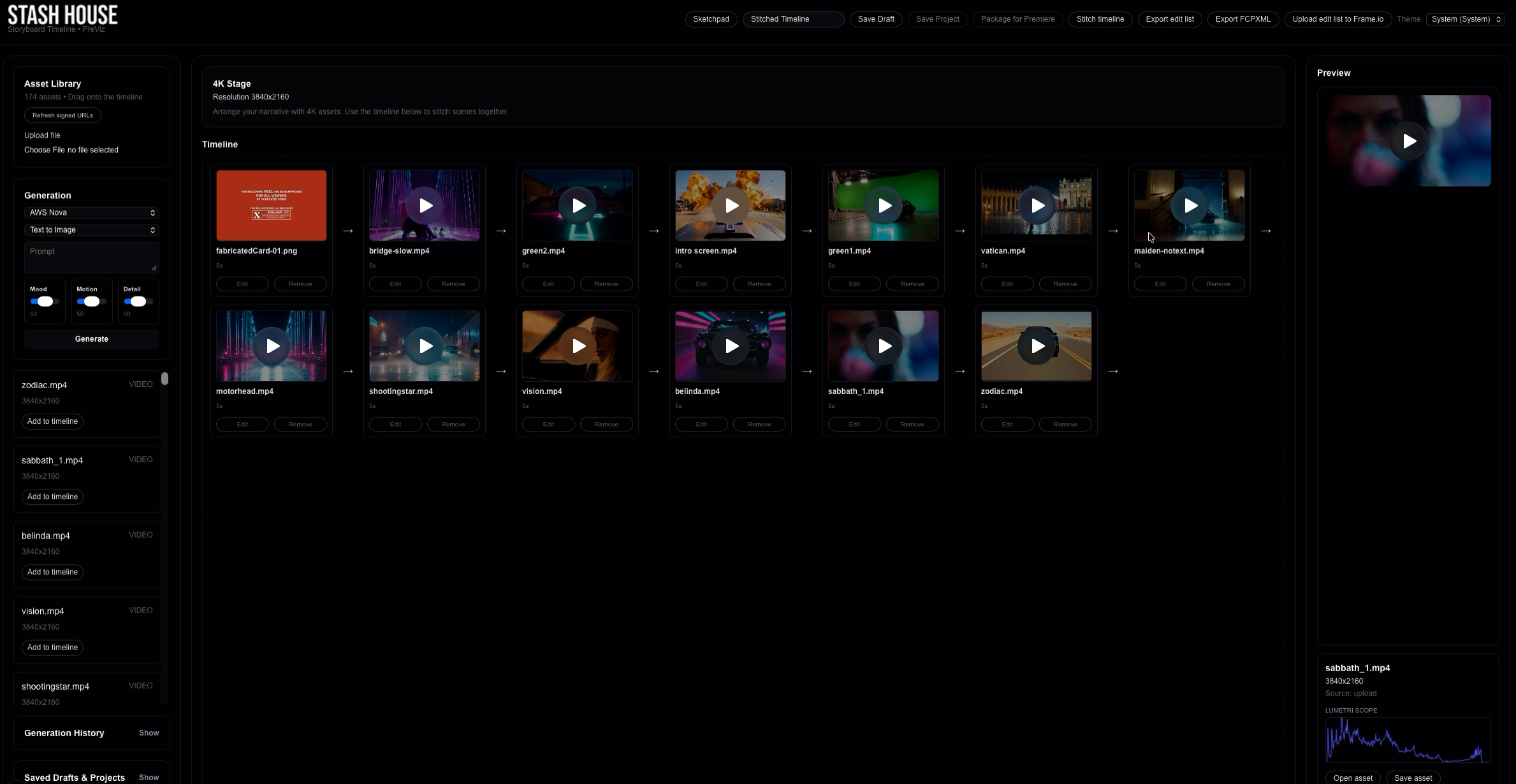
Generate, Then Place
Stash House isn't a toy — it's built for the way creatives actually work. You can generate assets from text (text-to-image, text-to-video), push existing frames further (image-to-image), or sketch and let the engine turn that into media. Every generated frame or clip can go straight onto the main timeline next to uploaded footage and stills. No round-tripping through five apps; the idea stays in one place from first beat to first cut.
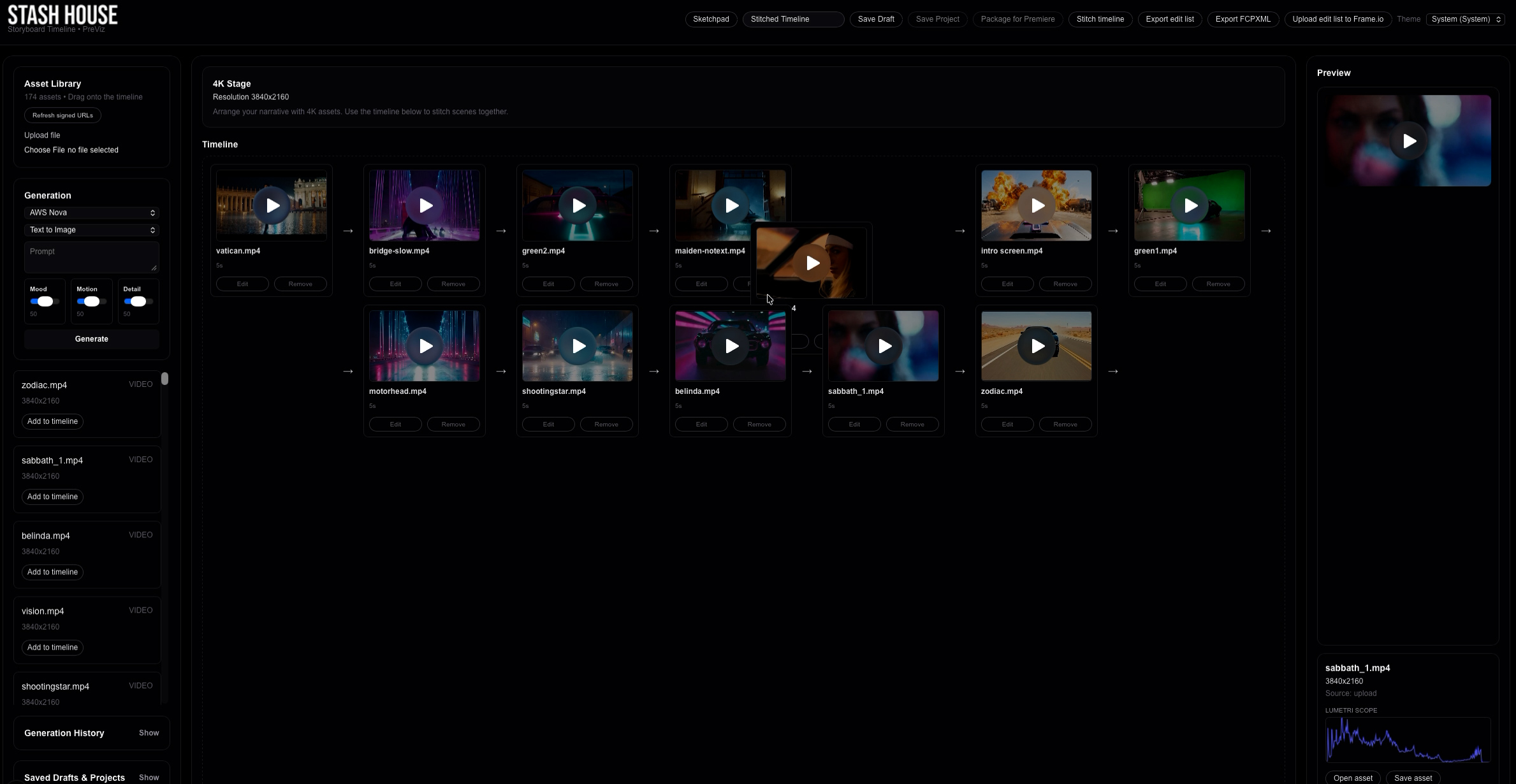
Compose and Edit
Storyboards are sequences, not scattered images. In Stash House you compose by dragging and dropping: shots, B-roll, and generated segments onto the timeline. You trim, slip, and adjust timing like in an NLE. You can tweak color and basic corrections so the board looks and feels closer to the final look. We also let you extract still photography from any asset — perfect for pitch decks, lookbooks, or reference for the DP. The goal is one environment where you block the story and refine it before you ever say "action."
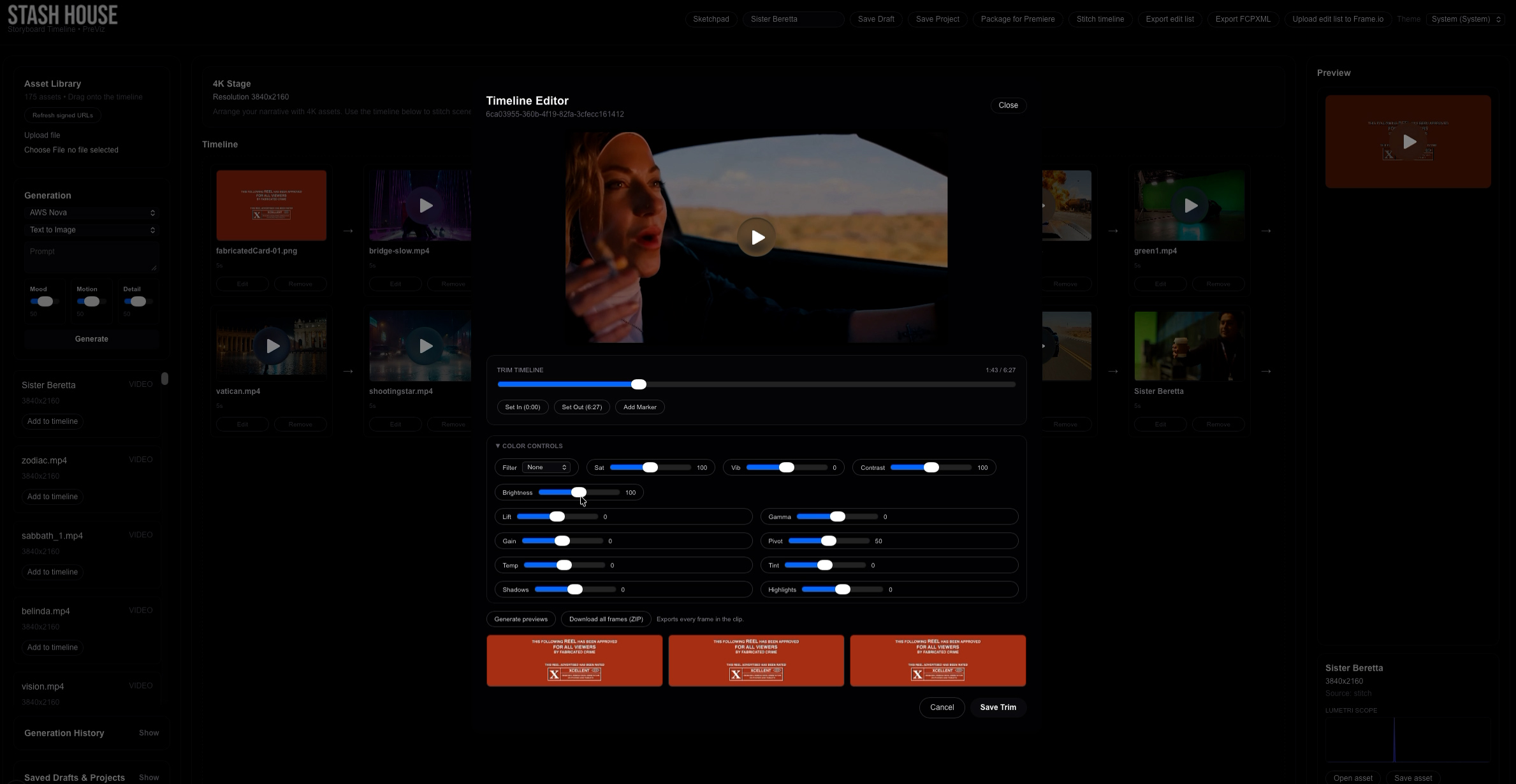
Into the Cut
When the board is locked, you don't start from zero in the bay. Stash House exports to Adobe Premiere Pro and DaVinci Resolve. Your storyboard becomes the backbone of the real edit: same order, same structure, ready for the editor to replace placeholders with final media. That's the bridge we care about — from "what if" to "this is the cut."
Stash House is the storyboard editor we use on our own concepts — and the one we're offering to filmmakers who want to move fast without losing the vision. If you think storyboards first, we built this for you.
Fabricated Crime — storyboards first. Then the heist.